TL;DR: The AI coding agent market in 2026 has converged on a shared architecture under the hood, with three distinct form factors: CLI agents that run autonomously in your terminal, IDE-native agents embedded in your editor, and cloud engineering agents that work independently on assigned tasks. The key skill shift is from prompt engineering to context engineering — project memory files like CLAUDE.md and AGENTS.md now define how effectively agents operate.
The Great Convergence
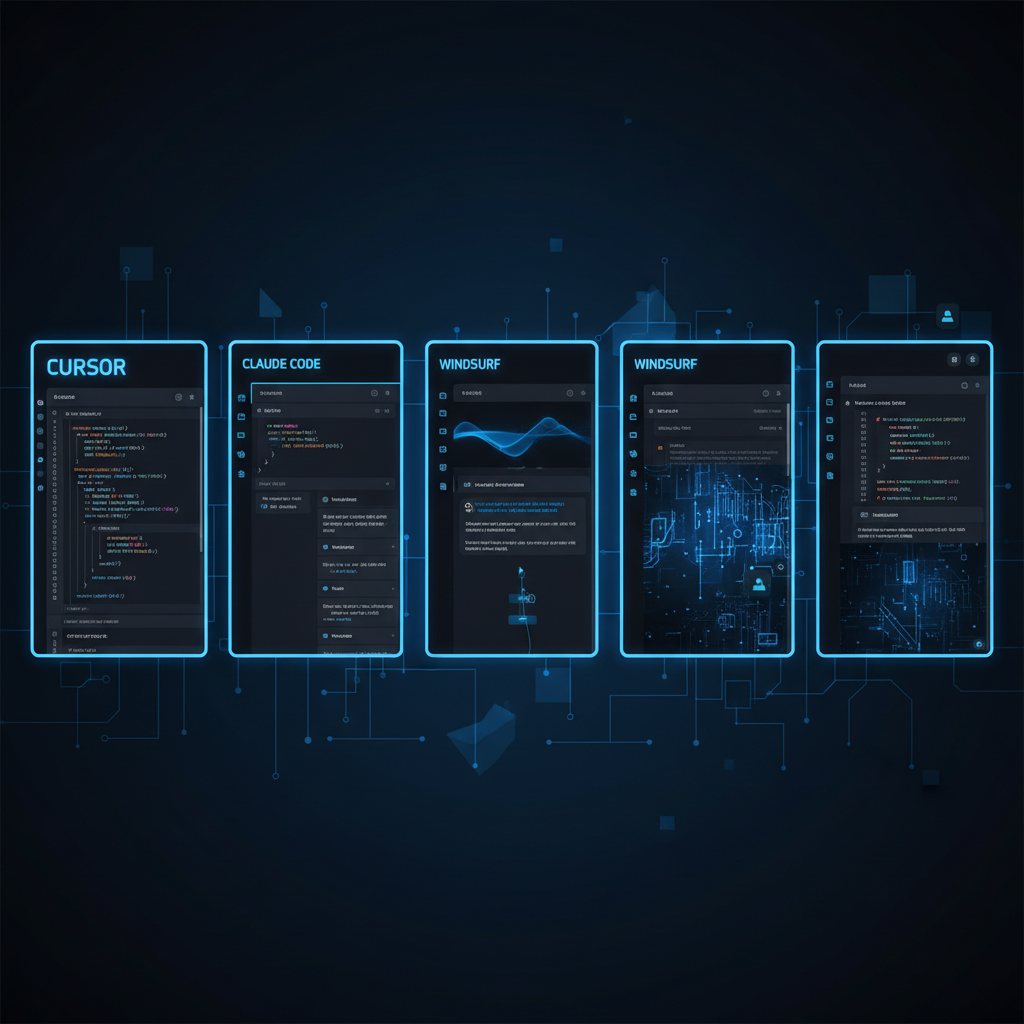
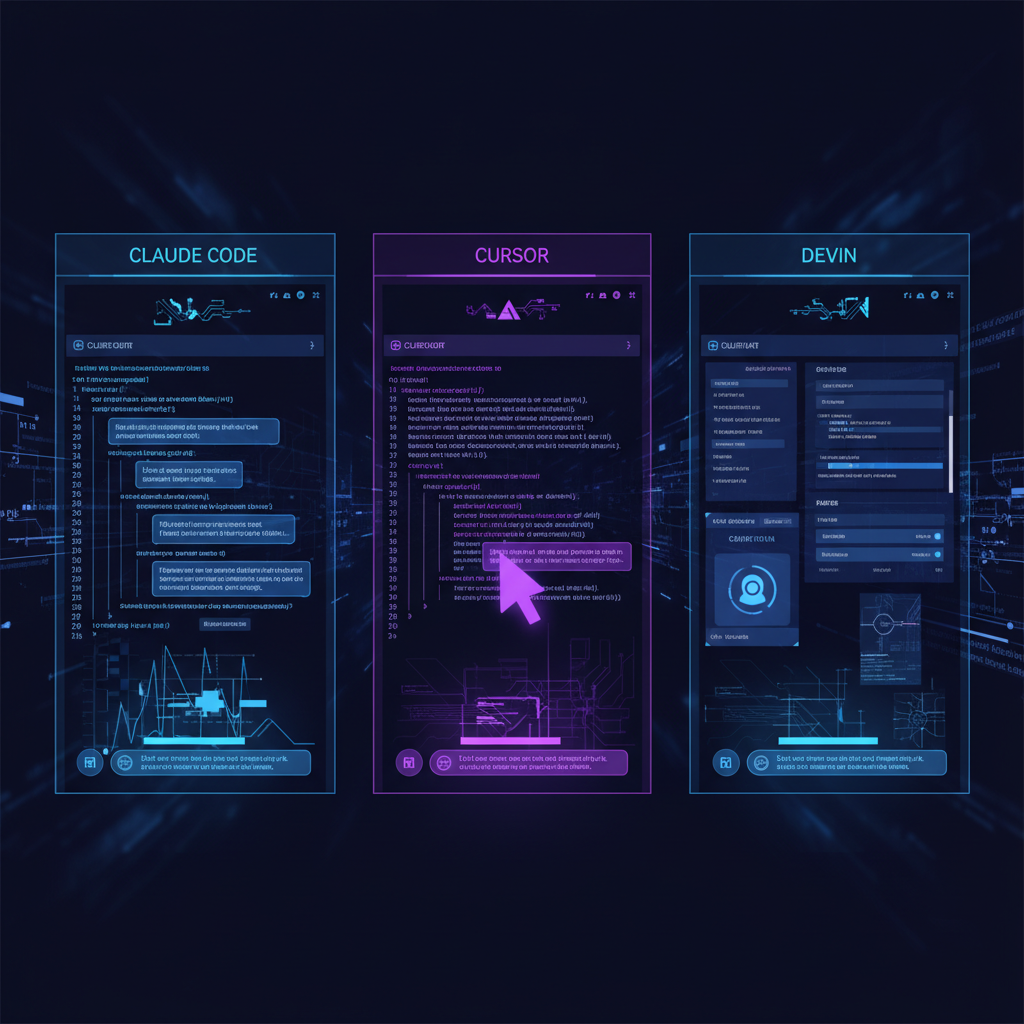
If you look at the top coding agents in 2026 — Claude Code, OpenAI Codex, GitHub Copilot, Gemini CLI, Cursor, Devin, Windsurf — they’re all starting to look remarkably similar under the hood. The reason is simple: the industry has converged on what software development looks like with AI.
As Dave Patten wrote in his March 2026 analysis, the shift is not about prompts or autocomplete anymore. It’s about agent systems that operate on codebases over time.
The core architectural primitives shared by every major coding agent:
- Repo memory files — Human-readable configs (
CLAUDE.md,AGENTS.md,GEMINI.md) that encode project structure, conventions, and testing requirements - Tool use — Agents interact with real dev tools (Git, shell, test runners, package managers) and execute commands directly
- Sub-agents — Specialized agents for planning, coding, testing, and review that collaborate on complex problems
- Long-running execution loops — Agents analyze → explore → implement → test → debug → iterate, running for minutes or hours
- Background agents — Persistent agents that monitor events (GitHub activity, schedules, webhooks)
- Active code exploration — Agents search symbols, inspect files, analyze dependencies, and run commands to build a working understanding of the codebase in real time
Three Archetypes of Coding Agents
All major tools are distinguished primarily by where the agent lives:
1. CLI-First Agents
Claude Code, Gemini CLI, Codex CLI, Copilot CLI
These live in your terminal. They’re the most flexible and hackable form factor.
Why terminals work better: The Unix terminal is a perfect environment for agents. grep provides structured context filtering. Exit codes enable automatic retries. Text-native output composes via pipes. At Rakuten, Claude Code ran a complex extraction method for 7 hours with 99.9% numerical accuracy — something no IDE plugin could sustain.
Claude Code leads on agent customization — sub-agents, hooks, skills, and deep project memory via CLAUDE.md. It excels at debugging complex issues, architectural refactors, and large code migrations.
OpenAI Codex (the 2026 version) focuses on autonomous execution over assistance. Its CLI supports multi-agent parallel execution and long-running workflows configured through AGENTS.md. Available via the ChatGPT interface and as a standalone CLI.
Gemini CLI offers free access to frontier models with a 1M token context window, making it an attractive entry point for developers experimenting with agentic workflows.
2. IDE-Native Agents
Cursor, Windsurf, Copilot in VS Code, Gemini Code Assist
These are embedded inside the editor, optimizing for developer flow rather than autonomous execution.
Cursor has evolved into an AI-native IDE (not just a plugin) with persistent Memories, background agents, MCP tool integrations, and Automations — cloud-triggered workflows that respond to GitHub events, schedules, or webhooks. It’s effectively a hybrid local + cloud agent platform.
Windsurf differentiates with its Cascade agent system and codemaps — structured representations of large codebases that help agents navigate complex repositories without getting lost.
GitHub Copilot in 2026 is a multi-model platform. In February 2026, GitHub added Claude and Codex as coding agent backends for Copilot Business and Pro users GitHub. Its Agent HQ lets you run multiple agents side-by-side, implementing issues, running tests, reviewing code, and opening PRs.
3. Cloud Engineering Agents
Devin, Codex cloud agents, GitHub coding agents, Cursor Automations
These run autonomously in the cloud. You assign work — they execute independently.
Devin gives each agent its own VM, workspace, and development environment. It implements features, debugs builds, writes tests, and reviews PRs like a remote team member. It aims to function as an engineer you assign tasks to, not a tool you use.
The defining characteristic of cloud agents is asynchronous work — you file a task, walk away, and come back to a PR. This represents the most radical shift in software development workflow since distributed version control.
Memory Is the New Prompt Engineering
Prompt engineering doesn’t scale. Agents need consistent context about how a project works, and that context has to persist across sessions.
This is why every major agent relies on memory files — project-level configuration documents that describe architecture, conventions, deployment, and testing requirements. Once written, agents reference them indefinitely.
The skill shift is from writing clever prompts to context engineering: curating the minimum set of high-signal tokens, placing critical information at the beginning and end of context windows, using just-in-time retrieval, and separating static context (project docs) from dynamic context (runtime state) for efficient prompt caching.
From RAG to Active Code Exploration
Another convergence: modern agents don’t just retrieve from a static index. They actively investigate the codebase in real time — searching symbols, inspecting files, analyzing dependencies, running commands, reading test failures. This iterative exploration builds a working understanding of the repository dynamically, far surpassing what any static retrieval system can provide.
The Common Stack in 2026
Most teams use a combination of tools rather than a single agent:
- Claude Code or Codex for complex agentic work (refactors, debugging, feature implementation)
- Copilot or Cursor for inline completions during active coding
- One open-source tool (Aider, Cline, or OpenCode) for model flexibility and custom workflows
Free tiers exist across the board: Copilot Free (2,000 completions + 50 premium requests/month), Gemini CLI (free frontier models), and all open-source tools remain completely free.
The Bottom Line
Software development in 2026 is transitioning from writing code to orchestrating agents that write code. The CLI form factor is winning for complex autonomous work because terminals provide structured feedback loops and composability. IDE-native agents excel for inline development flow. Cloud agents handle the asynchronous “assign and forget” pattern.
The most valuable skill for developers this year is not learning a new language or framework — it’s learning how to engineer context and orchestrate agent workflows effectively.
*Sources: GitHub GitHub Copilot multi-model announcement (Feb 2026), Firecrawl agentic AI trends report (Mar 2026), Dave Patten’s “State of AI Coding Agents” (Mar 2026), MightyBot ranking of coding age) Claude Code OpenAI Codex OpenAI Codex
← Back to all posts