TL;DR: MCP went from Anthropic experiment in late 2024 to industry standard in 2026 — 97M+ monthly SDK downloads, donated to the Linux Foundation’s Agentic AI Foundation, backed by OpenAI, Google, Microsoft, and AWS. The 2026 roadmap targets enterprise readiness: audit trails, SSO auth, gateway patterns, and configuration portability. Here’s what changed and how to build with it.
MCP by the Numbers
The Model Context Protocol has crossed from developer curiosity into production infrastructure. Key metrics from the donation announcement and ecosystem reports:
- 97M+ monthly SDK downloads across Python and TypeScript Anthropic — Donating the Model Context Protocol and Establishing t…
- 10,000+ active public MCP servers in the registry Anthropic — Donating the Model Context Protocol and Establishing t…
- 75+ Claude connectors powered by MCP Maria Paktiti — Everything your team needs to know about MCP in 20…
- Adopted by: ChatGPT, Cursor, Gemini, Microsoft Copilot, VS Code Anthropic — Donating the Model Context Protocol and Establishing t…
- Infrastructure support: AWS, Cloudflare, Google Cloud, Azure Anthropic — Donating the Model Context Protocol and Establishing t…
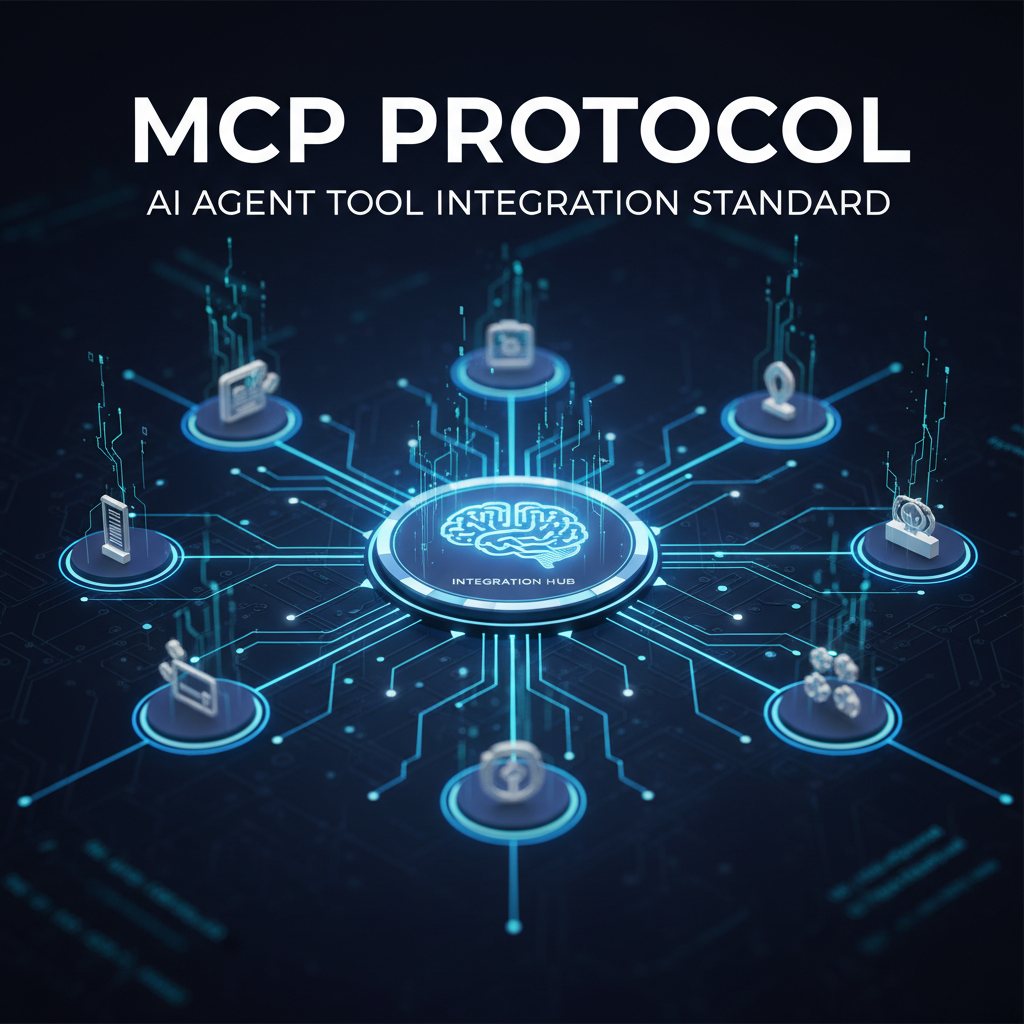
These numbers aren’t just growth — they represent a protocol that solved a real problem. Before MCP, every AI app built custom connectors for each tool. The N×M integration matrix collapsed to N+M.
The Linux Foundation Donation
In December 2025, Anthropic donated MCP to the newly formed Agentic AI Foundation (AAIF) under the Linux Foundation Maria Paktiti — Everything your team needs to know about MCP in 20…. Co-founded by Anthropic, Block, and OpenAI, with supporting members including Google, Microsoft, AWS, Cloudflare, and Bloomberg, this move guaranteed vendor-neutral stewardship.
“Placing MCP in a vendor-neutral foundation ensures developers can invest confidently in this universal standard, knowing it will remain open, interoperable, and community-driven.” — Swami Sivasubramanian, AWS Swami Sivasubramanian — LinkedIn reaction to AAIF Announcement
Three founding projects entered AAIF: MCP (Anthropic), goose (Block), and AGENTS.md (OpenAI). The governance model remains unchanged — maintainers continue prioritizing community input.
The 2026 Roadmap: Enterprise Readiness
Published by lead maintainer David Soria Parra in March 2026, the roadmap identifies four gaps blocking enterprise adoption MCP’s 2026 Roadmap Makes Enterprise Readiness a Top Priority, Work…:
1. Audit Trails and Observability
Enterprises have no standard way to surface what an agent did, when, and with whose authorization. Current approach: hack together custom logging and trace IDs. The goal is structured observability that feeds into existing SIEM and APM pipelines — no parallel stack required.
Status: Pre-RFC. Maintainers explicitly want enterprise practitioners to lead problem statements.
2. Enterprise-Managed Auth
Static client secrets are the default but unacceptable for IT departments. The roadmap targets SSO-integrated flows where MCP access is managed from the same identity console (IdP) used for everything else.
Direction: Access brokered through existing identity layers — SSO in, scoped tokens out. No carve-outs from existing security policies.
3. Gateway and Proxy Patterns
No defined behavior exists for intermediaries (API gateways, security proxies). Three specific gaps:
- Authorization propagation — how does the downstream server know the original client’s authorization?
- Session semantics — stateful sessions become unclear with a gateway in the middle
- Visibility boundaries — what can a gateway inspect or modify (e.g., tool call arguments)?
Currently every enterprise invents its own gateway behavior. The roadmap standardizes this.
4. Configuration Portability
Server configuration is tied to a specific client. Switching clients means reconfiguring everything. For enterprises rolling out MCP to hundreds of developers across multiple tools, this is a deployment blocker.
Goal: Configure an MCP server once and have it work across any client.
Key Technical Milestones Since Launch
Beyond the roadmap, several technical advances shipped:
| Milestone | Date | What It Does |
|---|---|---|
| Async tasks | Nov 2025 | Call-now, fetch-later pattern for long-running operations |
| Server-side agent loops | Nov 2025 | Servers orchestrate multi-step reasoning internally |
| MCP Apps | Jan 2026 | Tools return HTML interfaces in sandboxed iframes |
| Programmatic Tool Calling | Late 2025 | Handle thousands of tools efficiently in production Maria Paktiti — Everything your team needs to know about MCP in 20… |
| Streamable HTTP | Mar 2025 | Remote servers via HTTP + SSE, proxy-compatible |
MCP Apps deserves special attention. Co-developed with OpenAI, it lets tools return rich UI components that render directly in the user’s chat as sandboxed iframes State of MCP Apps as of March 2026, Reddit r/mcp. Launch partners include Amplitude, Asana, Box, Canva, Figma, and Slack. This blurs the line between “tool call” and “full application.”
How to Build With MCP Today
Here’s what developers proposals MCP’s 2026 Roadmap Makes Enterprise Readiness a Top Priority, Work…. If your team has hit an MCP blocker, this is the time to shape the protocol.
What’s Next
The roadmap identifies items still on the horizon: DPoP (Demonstration of Proof of Possession) for token binding, Workload Identity Federation proposals, and conformance testing suites. Multi-tenancy, rate limiting, and cost attribution remain at the infrastructure layer for now.
The bigger story: MCP has graduated from “interesting protocol” to “critical infrastructure.” With the Linux Foundation’s track record (Kubernetes, Node.js, PyTorch), the governance is in good hands. The enterprise gaps are real but actively being solved. 2026 is the year MCP becomes the standard plumbing for AI agent tool integration.
Sources
Anthropic — Donating the Model Context Protocol and Establishing t… Anthropic — Donating the Model Context Protocol and Establishing the Agentic AI Foundation
Maria Paktiti — Everything your team needs to know about MCP in 20… Maria Paktiti — Everything your team needs to know about MCP in 2026, WorkOS Blog
Swami Sivasubramanian — LinkedIn reaction to AAIF Announcement Swami Sivasubramanian — LinkedIn reaction to AAIF Announcement
MCP’s 2026 Roadmap Makes Enterprise Readiness a Top Priority, Work… MCP’s 2026 Roadmap Makes Enterprise Readiness a Top Priority, WorkOS Blog
State of MCP Apps as of March 2026, Reddit r/mcp State of MCP Apps as of March 2026, Reddit r/mcp
References
Anthropic — Donating the Model Context Protocol and Establishing t… Anthropic — Donating the Model Context Protocol and Establishing the Agentic AI Foundation Maria Paktiti — Everything your team needs to know about MCP in 20… Maria Paktiti — Everything your team needs to know about MCP in 2026, WorkOS Blog Swami Sivasubramanian — LinkedIn reaction to AAIF Announcement Swami Sivasubramanian — LinkedIn reaction to AAIF Announcement
← Back to all posts