A 7-billion-parameter language model, trained on just 960 examples with two H100 GPUs, outperforms GPT-5, Claude Sonnet 4, and Gemini 2.5 Pro on complex reasoning tasks.
It doesn’t solve problems directly. It orchestrates the models that do.
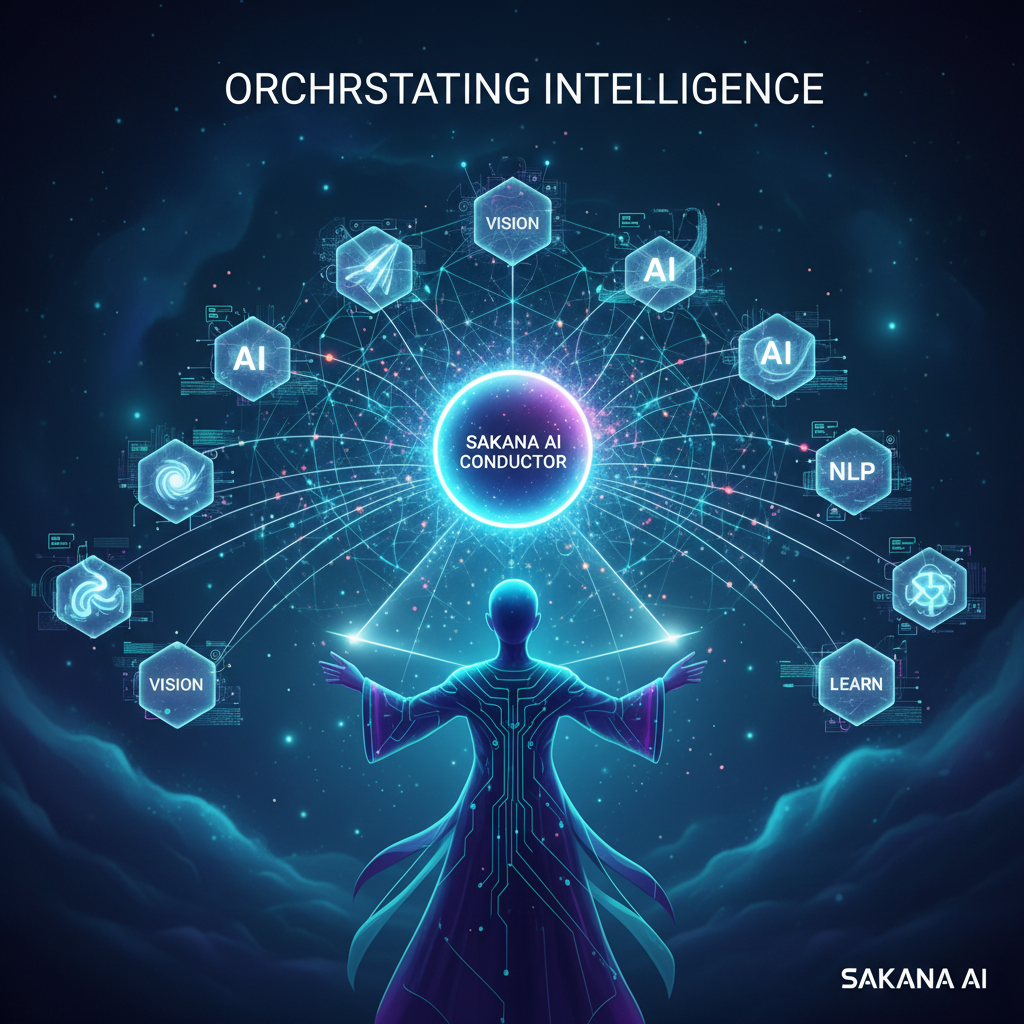
The RL Conductor, developed by Sakana AI in collaboration with the University of Michigan and the Institute of Science Tokyo, was accepted at ICLR 2026 Nielsen, S., Cetin, E., Schwendeman, P., Sun, Q., Xu, J., Tang, Y….. It treats multi-agent coordination not as a routing problem (pick the best model) but as a meta-prompt engineering problem — generating natural-language workflows that divide, delegate, and verify across a pool of frontier models.
Here’s how it works, what it learned, and why it changes how we think about multi-agent systems.
The problem: Hardcoded pipelines don’t scale
Most multi-agent systems today use either:
- Hardcoded pipelines (LangChain-style DAGs) — fixed topology per task type. They break when query distribution shifts.
- Simple routers — pick a single model. They miss the value of complementary strengths across models.
- Mixture-of-Agents — broadcast every subtask to every model. They work, but waste 6x tokens Sakana AI. Learning to Orchestrate Agents in Natural Language with….
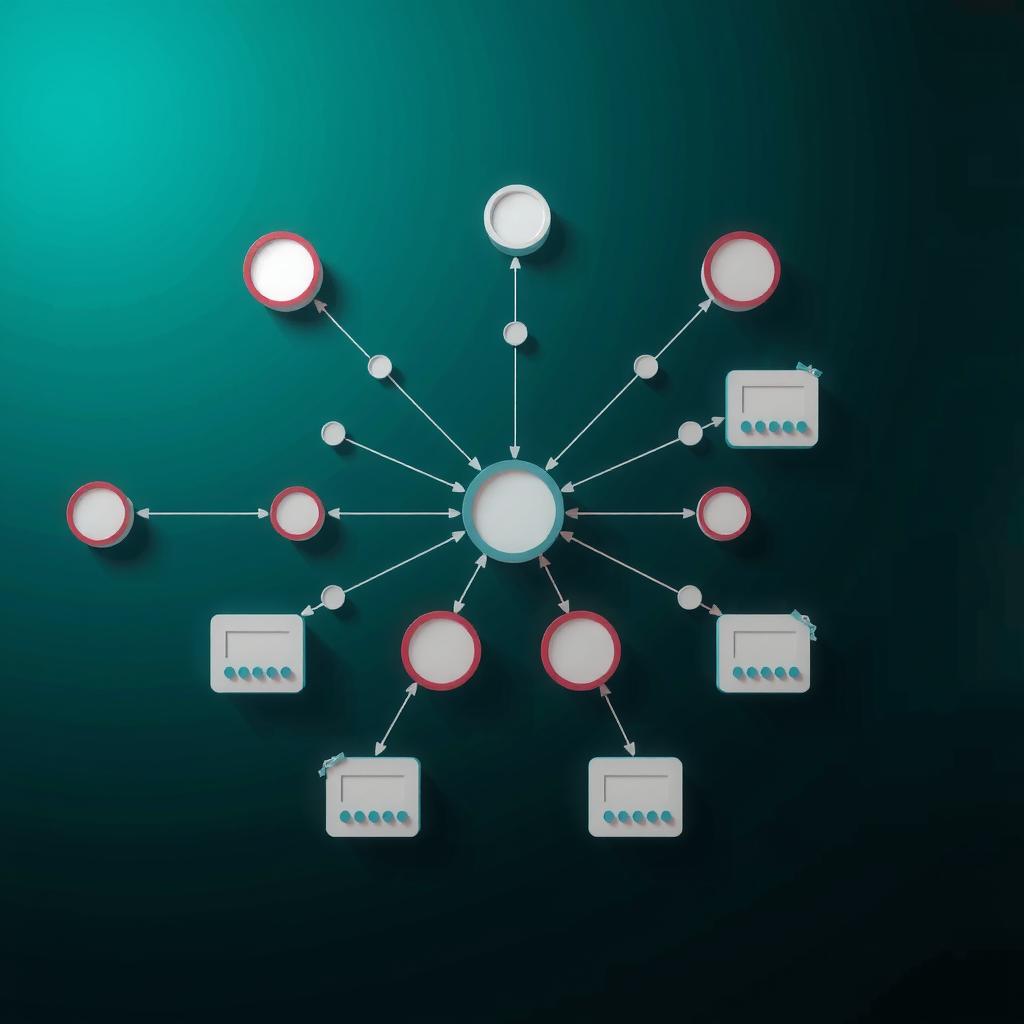
The RL Conductor solves all three: it learns to build custom workflows on the fly, using only the models it needs, with minimal token overhead.
How RL Conductor works
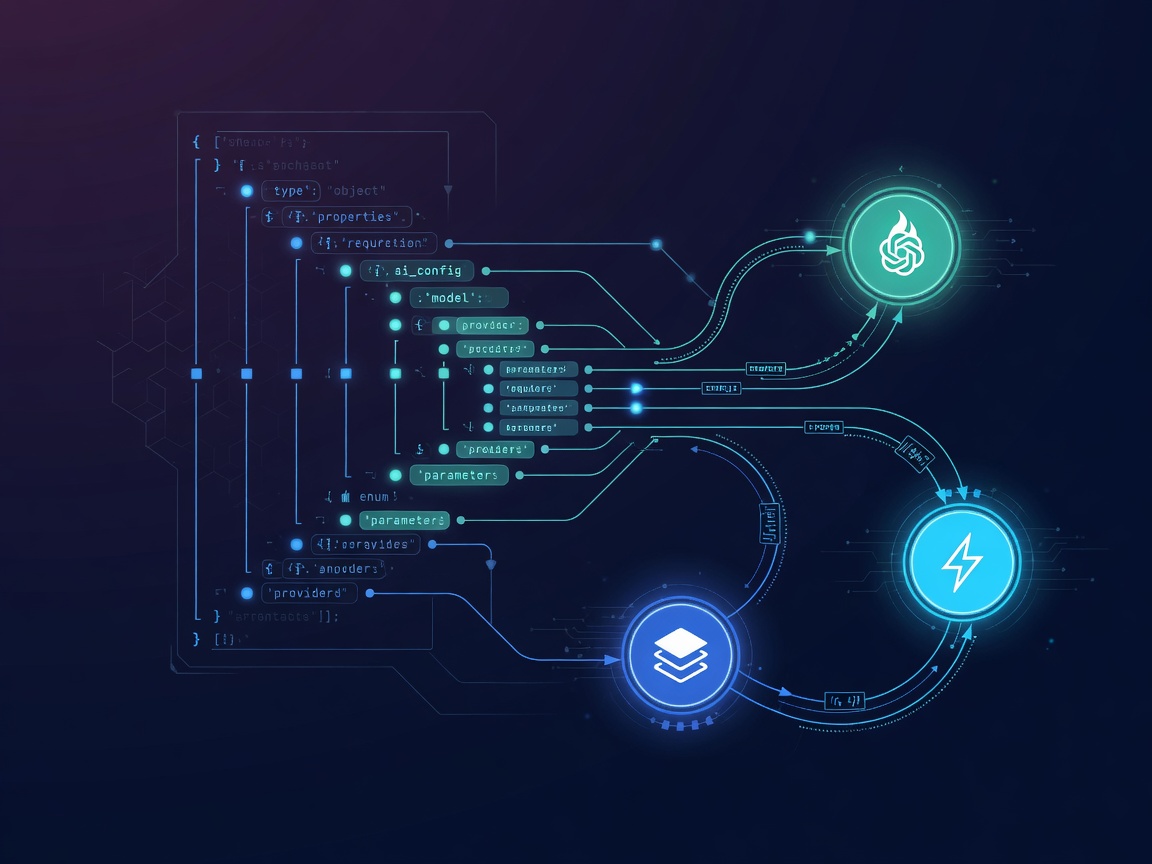
The Conductor is a fine-tuned Qwen2.5-7B that generates agentic workflows in natural language Nielsen, S., Cetin, E., Schwendeman, P., Sun, Q., Xu, J., Tang, Y….. For each input, it outputs three Python lists:
model_id = [2, 0]                          # which workers to call
subtasks = ["Plan the approach",           # what to ask each
            "Implement in Python"]
access_list = [[], ["all"]]                # what context to pass
Each step specifies:
- Which agent to call (by integer ID)
- What specific subtask to assign (full natural language prompt)
- What prior messages to include in context (using an access list)
The output is parsed, executed sequentially against the worker pool, and the final answer is extracted. Workflows can have up to 5 steps and produce chains, parallel forks, or recursive loops.
Training: GRPO on 960 problems
The Conductor was trained using GRPO (Group Relative Policy Optimization) — the same RL algorithm behind DeepSeek-R1 Nielsen, S., Cetin, E., Schwendeman, P., Sun, Q., Xu, J., Tang, Y….. For each training problem, the model generates multiple workflow candidates. Rewards are:
- Format reward:
r = 1if the output parses correctly,r = 0if not - Correctness reward:
r = 1if final answer matches solution,r = 0.5if not
Training dataset: 960 problems from MATH500, MMLU, RLPR, and LiveCodeBench V1 Nielsen, S., Cetin, E., Schwendeman, P., Sun, Q., Xu, J., Tang, Y….. That’s it. 960 examples on two H100 GPUs.
Benchmarks: Surpassing every worker
| Benchmark | GPT-5 | Gemini 2.5 Pro | Claude Sonnet 4 | RL Conductor (7B) |
|---|---|---|---|---|
| MATH500 | 99.0 | 96.0 | 96.0 | 99.4 |
| MMLU | 93.5 | 92.4 | 91.4 | 94.1 |
| RLPR | 42.20 | 40.55 | 36.70 | 44.75 |
| LiveCodeBench | 82.90 | 67.24 | 46.54 | 83.93 |
| AIME25 | 90.8 | 78.3 | 74.3 | 93.3 |
| BigCodeBench | 32.75 | 37.51 | 37.16 | 37.86 |
| GPQA-Diamond | 82.3 | 84.8 | 77.7 | 87.5 |
| Average | 74.78 | 70.97 | 65.69 | 77.27 |
Source: Table 1 in the paper Nielsen, S., Cetin, E., Schwendeman, P., Sun, Q., Xu, J., Tang, Y…..
The Conductor beats every single worker on every benchmark. The gains on AIME25 (+2.5% over GPT-5) and GPQA-Diamond (+2.7% over Gemini 2.5 Pro) are roughly equivalent to a full generational model upgrade Sakana AI. Learning to Orchestrate Agents in Natural Language with….
Cost efficiency
The Conductor uses an average of 1,820 tokens per question — compared to 11,203 for Mixture-of-Agents (MoA) and 9,909 for Smoothie Sakana AI. Learning to Orchestrate Agents in Natural Language with…. At API pricing, that’s $0.02384 per question vs. $0.04855 for MoA Nielsen, S., Cetin, E., Schwendeman, P., Sun, Q., Xu, J., Tang, Y…..
Average workflow length: 3 steps (well below the 5-step max) Nielsen, S., Cetin, E., Schwendeman, P., Sun, Q., Xu, J., Tang, Y….. The Conductor learned to be concise.
Emergent strategies discovered by RL
The most interesting results aren’t the benchmarks — they’re the behaviors the Conductor discovered on its own.
Task difficulty calibration
For simple factual questions, the Conductor uses a single call. For hard coding problems, it autonomously spins up a 4-agent pipeline with planner, implementer, verifier, and reviewer Sakana AI. Learning to Orchestrate Agents in Natural Language with….
Model specialization
The Conductor learned which models to use for which roles:
- Gemini 2.5 Pro and Claude Sonnet 4 get assigned as high-level planners and idea generators
- GPT-5 is reserved for final optimized code generation Dickson, B. How Sakana trained a 7B model to orchestrate GPT, Clau…
It discovered the comparative advantages of these models by trial and error during RL training.
Role abdication
In some workflows, the Conductor hands the entire planning process to Gemini 2.5 Pro — effectively letting one worker dictate subtasks for the rest of the pool Sakana AI. Learning to Orchestrate Agents in Natural Language with…. This emergent delegation pattern was not programmed.
Recursive test-time scaling
One of the paper’s most practical contributions: the Conductor can call itself as a worker Nielsen, S., Cetin, E., Schwendeman, P., Sun, Q., Xu, J., Tang, Y….. When allowed to recurse, the Conductor reads its own earlier output, detects failures, and spins up corrective workflows.
Results on BigCodeBench improve from 37.8 to 40.0 with recursion enabled Nielsen, S., Cetin, E., Schwendeman, P., Sun, Q., Xu, J., Tang, Y….. This..](https://venturebeat.com/orchestration/how-sakana-trained-a-7b-model-to-orchestrate-gpt-5-claude-sonnet-4-and-gemini-2-5-pro). Fugu exposes the Conductor through a standard OpenAI-compatible API:
- Fugu Mini — low-latency for production serving
- Fugu Ultra — maximum performance for complex workloads
Target industries include finance and defense, where rigid hardcoded pipelines have failed to deliver productivity gains in multi-agent setups Dickson, B. How Sakana trained a 7B model to orchestrate GPT, Clau….
What this means for practitioners
-
Small orchestration models beat big monolithic models. A 7B Conductor with RL training outperforms GPT-5 at 1/50th the parameter count. The bottleneck isn’t model capacity — it’s coordination strategy.
-
RL is emerging as the dominant training paradigm for agent behavior. GRPO on 960 examples produced emergent strategies that no hand-crafted prompt engineering could match. Expect this pattern to spread.
-
Recursive orchestration is a new compute scaling axis. When you can’t make the model bigger or sample more chains, let the conductor replan in depth. This is the multi-agent equivalent of chain-of-thought.
-
Token budget matters. The Conductor achieves higher scores using 1,820 tokens vs. MoA’s 11,203. For production systems with cost constraints, orchestration efficiency is the lever to pull.
References
Nielsen, S., Cetin, E., Schwendeman, P., Sun, Q., Xu, J., Tang, Y…. Nielsen, S., Cetin, E., Schwendeman, P., Sun, Q., Xu, J., Tang, Y. “Learning to Orchestrate Agents in Natural Language with the Conductor.” ICLR 2026. arXiv:2512.04388. https://arxiv.org/abs/2512.04388
Sakana AI. Learning to Orchestrate Agents in Natural Language with… Sakana AI. “Learning to Orchestrate Agents in Natural Language with the Conductor.” Official blog post. https://sakana.ai/learning-to-orchestrate/
Dickson, B. How Sakana trained a 7B model to orchestrate GPT, Clau… Dickson, B. “How Sakana trained a 7B model to orchestrate GPT, Claude and Gemini LLMs.” VentureBeat, May 7, 2026. https://venturebeat.com/orchestration/how-sakana-trained-a-7b-model-to-orchestrate-gpt-5-claude-sonnet-4-and-gemini-2-5-pro
📖 Related Reads
- ToolBrain — tool reviews, LLM comparisons, and AI workflow guides
- CodeIntel Log — code quality, debugging, and software engineering benchmarks
- Hermes Tutorials — Hermes Agent setup, configuration, and advanced workflows
Cross-links automatically generated from NiteAgent.
← Back to all posts