LLM Security Toolkit Stack: NeMo Guardrails vs LLM Guard vs Guardrails AI
If your team ships LLM agents to production, you already know the play: add a guardrail layer before deploy. But “guardrail” means three very different things depending on which open-source toolkit you reach for. NVIDIA’s NeMo Guardrails treats safety as conversation steering — a policy engine that decides what the bot can say and when. Protect AI’s LLM Guard treats it as a threat filter — a composable scanner pipeline intercepting injection, jailbreak, and PII at the network layer. Guardrails AI treats it as a contract enforcer — validating and fixing outputs until they match a declared schema. Pick the wrong mental model and you have a gap in your stack. This post breaks down all three by architecture, threat coverage, latency profile, and where each wins in production.
Three philosophies: steer, filter, validate
The three libraries approach different parts of the same problem. NeMo Guardrails (GitHub, 6,783 stars, Apache-2.0, v0.23.0) is a policy layer wrapping the full conversation — input, output, dialog flow, retrieval, tool execution — in a declarative DSL called Colang. LLM Guard (GitHub, 3,194 stars, MIT, v0.3.16) is a security toolkit: you assemble a pipeline of independent scanners, each checking for one threat class (injection, jailbreak, secrets, toxicity, PII). Guardrails AI (GitHub, 7,199 stars, Apache-2.0, v0.10.2) validates output: you declare what valid output looks like (JSON schema, types, field constraints), it checks the model’s response, and re-prompts on failure. These are not alternatives — they protect different parts of the request lifecycle.
NeMo Guardrails: programmable conversation control
Built by NVIDIA for chatbots that need hard rules about discussion topics, transitions, and RAG surface area. You write Colang — a DSL that reads like a state machine with natural-language patterns.
The framework defines five rail types: input rails that inspect, transform, or block the user’s message before reaching the LLM; output rails that inspect, transform, or block the model’s response and can redact sensitive data; dialog rails that control conversation flow using canonical forms (e.g., “user asks about stock price” maps to a canonical form, and the rail decides whether to answer, deflect, or route to a tool); retrieval rails that filter RAG chunks before they enter context; and execution rails that gate function calls.
A dialog rail:
define user express greeting
  "hello"
  "hi there"

define flow
  user express greeting
  bot express greeting
The runtime classifies each utterance against canonical forms using an embedded LLM call, then walks the Colang flow graph. Unmatched topics trigger a default “I cannot answer” response (NeMo Guardrails docs).
Where NeMo wins: conversational agents where topic steering, persona adherence, and multi-turn control matter more than throughput. RAG chatbots, customer-support copilots, internal assistants needing audit trails.
The cost: each rail evaluation needing classification makes an LLM call — 200–500 ms overhead per turn. Teams needing sub-100 ms guardrails will find NeMo heavy.
LLM Guard: composable security scanners
LLM Guard takes the opposite approach: small, single-purpose scanners. Build a pipeline, run on user input before the LLM call, and on output before returning to the user (LLM Guard docs).
The scanner library is extensive. PromptInjection detects injection attempts with a dedicated model. Jailbreak checks for known jailbreak patterns. Secrets scans for API keys, tokens, passwords, and can redact them. Anonymize/Deanonymize is the standout: it detects and replaces PII (names, emails, phone numbers, credit cards) in the input before it reaches the LLM, then reverses the mapping on output. Toxicity, Bias, BanSubstrings, Code/Malicious Imports, and Regex/JSON validation round out the catalog.
A typical pipeline:
from llm_guard import scan_output, scan_input
from llm_guard.input_scanners import Anonymize, PromptInjection

scanners = [Anonymize(), PromptInjection()]
sanitized_prompt, risk = scan_input(scanners, raw_input)
Each scanner returns a risk score and pass/fail. You decide whether to block, log, or pass with redacted fields.
Where LLM Guard wins: input security, PII handling, and output toxicity filtering at the lowest latency. The right tool for API gateway-level filtering. The MIT license makes it safest for corporate legal review.
The cost: each scanner may load a model — stack ten and you are at 2–3 GB memory. The common set (Anonymize + PromptInjection + Jailbreak + Secrets) stays ~500 MB at under 100 ms per call. No conversation control — it is a stateless filter.
Guardrails AI: output validation and structured guarantees
Guardrails AI solves a different problem: once the LLM responds, how do you guarantee output is correct in structure and safe in content? It wraps the output generation stage with validators and a re-ask loop.
You declare the expected output structure (as a Pydantic model) and attach validators from the Guardrails Hub — pre-built checks like profanity-free, regex-match, or valid-range:
from guardrails import Guard
from guardrails.hub import ProfanityFree
from pydantic import BaseModel, Field

class Meeting(BaseModel):
    summary: str
    action_items: int = Field(ge=1, le=10)

guard = Guard.for_pydantic(Meeting).use(ProfanityFree(on="output"))
validated = guard(llm_callable, prompt=prompt)
If output fails validation, Guardrails AI re-asks the LLM with the error as context, looping until it passes. The Validator Hub (docs) offers validators like valid-json, is-profanity-free, regex-match, and dozens more. The Guardrails Hub CLI (guardrails hub install ...) scaffolds and installs validators.
Where Guardrails AI wins: systems that must produce structured output — JSON APIs, function-calling pipelines, data-extraction agents, report generators. If your downstream depends on valid JSON with fields in specific ranges, this is the only tool that guarantees it.
The cost: every validation failure triggers a full LLM round trip. Input scanning is minimal by default; pair with LLM Guard for thorough input security. Re-asks on error-prone models can add 2x–5x latency.
Side-by-side comparison
| Dimension | NeMo Guardrails | LLM Guard | Guardrails AI |
|---|---|---|---|
| Philosophy | Conversation behavior steering via DSL | Composable security scanners | Output validation + structured guarantees |
| Stars | 6,783 | 3,194 | 7,199 |
| License | Apache-2.0 | MIT | Apache-2.0 |
| Latest version | v0.23.0 | v0.3.16 | v0.10.2 |
| Where it sits | Wraps full conversation (in/out/dialog/retrieval/execution) | Pre/post LLM call as filter pipeline | Wraps output generation with re-ask loop |
| Input threats | Injection, jailbreak via input rails + canonical classification | Injection, jailbreak, secrets, PII, toxicity, bias, banned substrings | Minimal (validators on input possible) |
| Output threats | Topic off-limits, persona drift, sensitive data | Secrets, PII, toxicity, code, malicious imports | Schema violations, format errors, content validators |
| PII handling | Output redaction via output rails | Full Anonymize/Deanonymize (best-in-class) | No built-in PII treatment |
| Conversation control | Full dialog flow engine with canonical forms | None (stateless filter) | None |
| Structured outputs | No native support | Regex/JSON output scanner | Core feature with JSON schema + re-ask |
| Latency profile | Moderate-high (LLM per rail eval) | Low (<100 ms per scanner set) | Variable (low on pass, high on re-ask) |
| Best for | Chatbots, RAG copilots, topic-steered agents | API gateways, PII-sensitive apps, security pipelines | JSON APIs, function calling, data extraction |
Decision guide: which to pick
The three tools compose naturally. Here is how to choose:
Pick NeMo Guardrails if controlling what the agent talks about and how is primary — topic off-limits, persona adherence, retrieval filtering, audit trails. Good for: customer-support chatbots, internal RAG assistants, educational tutors. Pair with LLM Guard on input.
Pick LLM Guard if input security and data privacy come first — block prompt injection, redact PII before the model sees it, scan output for secrets. Good for: API gateways, multi-tenant SaaS, external-facing agents where data leakage is top risk. Pair with Guardrails AI on output.
Pick Guardrails AI if guaranteeing structured, schema-valid output is the priority. Good for: data extraction, function-calling agents, report generators. Pair with LLM Guard on input.
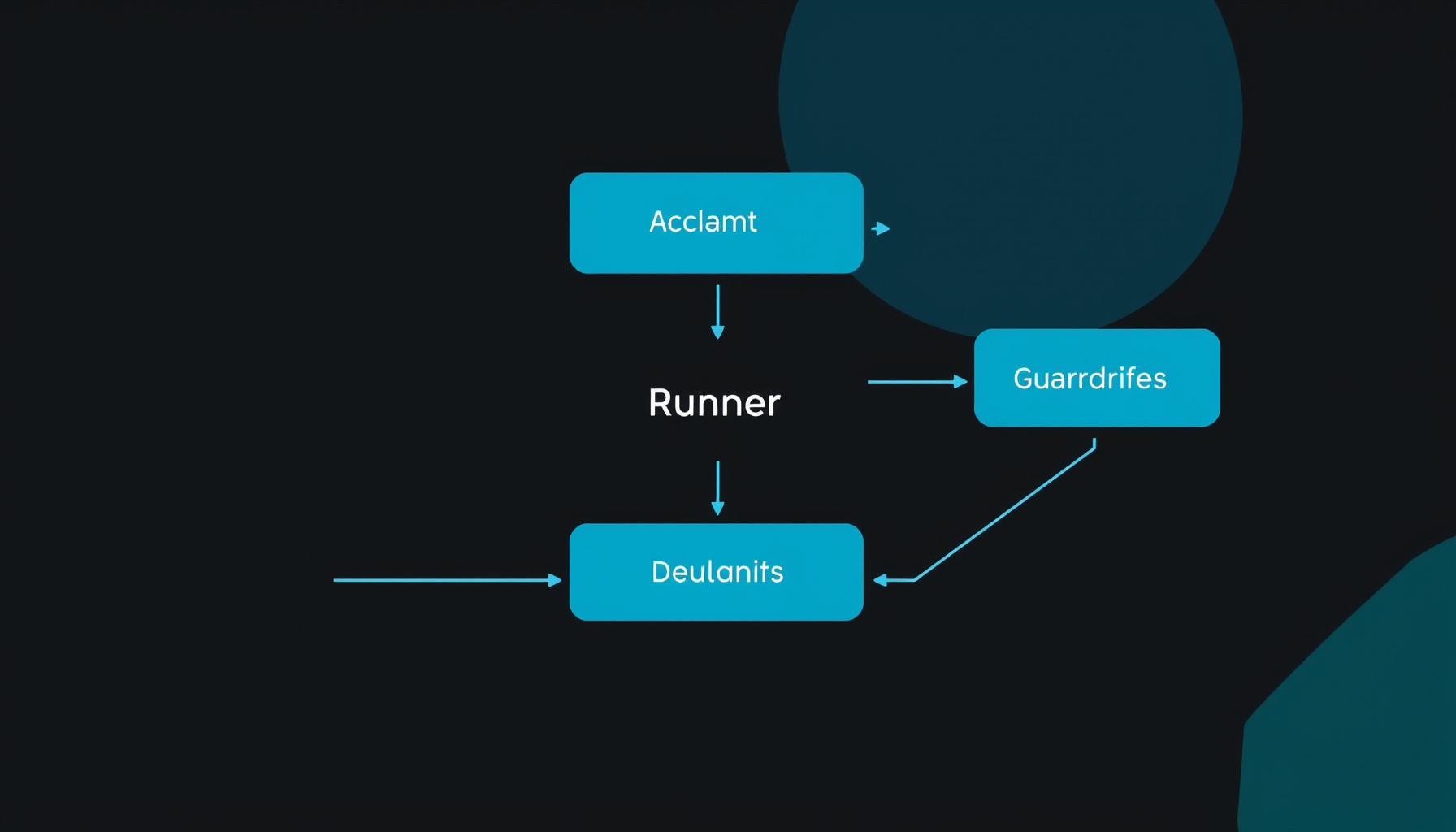
The layered production stack. A mature deployment runs all three: LLM Guard at the API gateway (block injection, redact PII, scan toxicity), NeMo Guardrails around the conversational agent (topic steering, dialog flow, retrieval filtering), and Guardrails AI on the output path (validate structure, re-ask on failure). No single tool covers the full attack surface — each layer catches what the others miss.
Closing
Open-source LLM guardrails in mid-2026 are production-ready. All three — NeMo Guardrails at 6,783 stars (repo), LLM Guard at 3,194 stars (repo), Guardrails AI at 7,199 stars (repo) — ship under permissive licenses, run on self-hosted Python, and get active commits as of July 2026. The choice is not about “best” but which gap you fill. Treat guardrails as defense-in-depth. The teams that ship safest layer them.
/protectai/llm-guard) GitHub GitHub
📖 Related Reads
- ToolBrain — tool reviews, LLM comparisons, and AI workflow guides
Cross-links automatically generated from NiteAgent.
← Back to all posts