EIP-8141 frame transactions: an agent builder’s field guide to Hegotá’s native account abstraction
The Ethereum Foundation Protocol Cluster just published its first unified EIP tier list, and it graded EIP-8141 Frame Transactions S: “Must ship. Defines the fork.” This is the earliest, most authoritative signal that the account model your agents authenticate and pay with is moving to consensus-level, post-quantum-capable, no-relayer frame transactions. Here is what frames are and how to prepare your agent stack.
What EIP-8141 Frame Transactions actually is
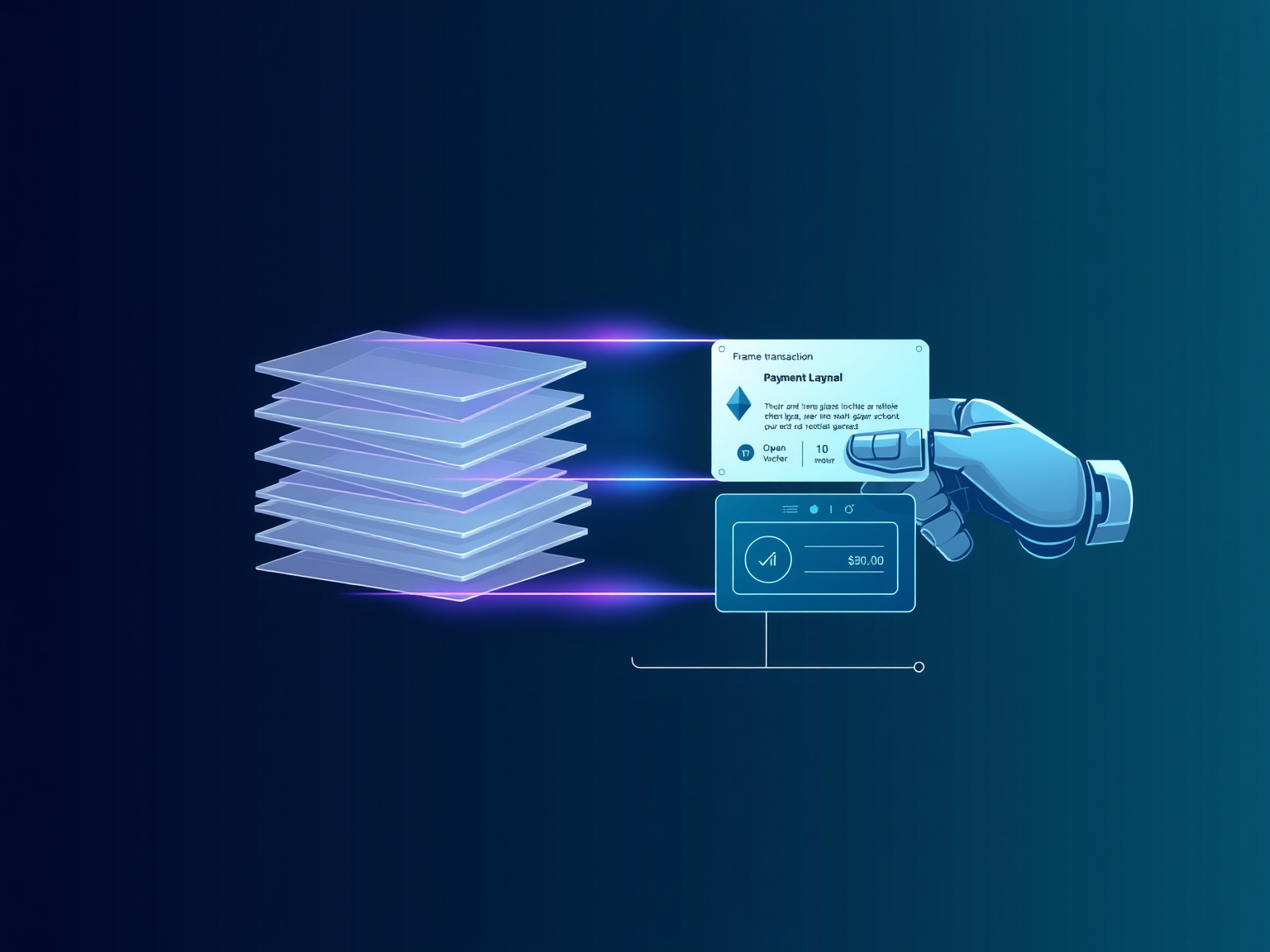
EIP-8141 introduces a new transaction type, 0x06, that decomposes a transaction into up to 64 frames, each with its own validation, execution, and gas-payment handling. Authored by Vitalik Buterin among others, it is a Draft EIP — the spec is not new, but the S-tier grade from today’s Hegotá tier list is the fresh news. EIP-8141 ethereum.org.
Anatomy: transaction type 0x06 and up to 64 frames
A frame transaction splits work across up to 64 frames, each independently handling validation, execution, and gas payment. The spec defines the atomic batch flag (ATOMIC_BATCH_FLAG 0x4) for all-or-nothing groups — its example is “approval followed by a swap” — and disallows approval-scope flags inside atomic batches. The mechanics are intricate, but the core idea is simple: move per-step logic from app-layer contracts to the transaction format itself. EIP-8141.
Atomic batches, approval scope, and who pays
Atomic batches let a sequence of frames settle together: either all succeed, or none do. This enables native multi-step operations like approve-then-swap without intermediate states. Fee payment is handled per-frame, and the spec supports alternative fee-payment schemes without centralized, third-party relayers. Who pays gas, and in what token, becomes a property of the account’s validation rules rather than a bundler’s choice. EIP-8141.
Why the spec exists: a native PQ off-ramp, key rotation, atomic batches, and fee payment without relayers
The EIP’s stated motivation is fourfold: a native off-ramp from today’s elliptic-curve (ECDSA) authentication to post-quantum (PQ) secure systems; accounts unlinked from their ECDSA keys so key rotation is native; simpler, safer smart accounts via native batch call processing; and alternative fee-payment schemes supported without centralized, third-party relayers. These are the primitives that agent wallets, session policies, and autonomous spend loops have been bolting onto ERC-4337 — now arriving as consensus defaults. EIP-8141.
Why the EF just made it S-tier for Hegotá (and why that is the news)
On Sept 7, 2026 the EF Protocol Cluster published its first unified tier list — 397 grades across 62 proposed EIPs from ~60 researchers and engineers — and graded EIP-8141 S, average 3.89 over 9 grades, category “Headliner”: “Locked-in EL headliner. Native account abstraction on security grounds: a path to PQ signature schemes without a fork per scheme, aggregation so PQ verification can be priced, and a route to retiring k1 keys.” S is defined as “Must ship. Defines the fork. If an S item is at risk, the schedule adjusts before the scope does.” EF Hegotá tier list EF priorities.
The EIP itself predates today and remains Draft; it is the grade that is fresh. The companion post confirms Hegotá scoping season is now open, with implementation realistically beginning in late Q4 2026 and Glamsterdam targeting December 2026. EF Hegotá tier list.
What ships with it: the Frames core (EIP-8250 + EIP-8272), the extension package, and the Hegotá/Glamsterdam timeline
The tier list ships EIP-8141 together with EIP-8250 (Keyed Nonces for Frame Transactions, A) and EIP-8272 (Recent Roots for Frame Transactions, A) as the “Frames core” headliner package — “delivering both headliners safely, and testing the interaction between them, is the fork’s core engineering commitment.” The extension package hardens transactions directly and gives accounts “a complete route away from k1 keys.” Hegotá scoping season opened as Glamsterdam approaches mainnet. EF Hegotá tier list EF priorities.
EIP-8250 Keyed Nonces and EIP-8272 Recent Roots: the Frames core
EIP-8250 (Keyed Nonces) lets many users share one sender for better anonymity while using separate nonces, so their transactions do not block one another — a direct fit for multi-agent shared senders. EIP-8272 (Recent Roots) provides the state-commitment anchor frames rely on for cross-frame consistency. Together, the tier list notes, they “complete the Frames core needed for Hegotá.” EF Hegotá tier list EF priorities.
The extension package: EIP-7906, EIP-8298, EIP-8151
The extension package — EIP-7906 Transaction Assertions, EIP-8298 SETCODEFROM, and EIP-8151 restricted ecRecover — “hardens transactions directly” and gives accounts a complete route away from k1 keys. These are not headliners; they are the guardrails that make the Frames core production-safe. EF Hegotá tier list.
Fork context: Glamsterdam is being tested now; Hegotá scoping is open
Glamsterdam is being tested now, with EF guidance for developers to test against its repricing on the Platåberget testnet (glam-devnet-8) using the affected-contracts checker before mainnet. Hegotá scoping season is open, and the EF says client teams can realistically begin Hegotá implementation in late Q4 2026. EF Glamsterdam EF priorities.
Why frame transactions matter for AI agents
The EF priorities post says frames make “transaction validation, execution, and gas payment programmable at the protocol level,” giving accounts “a native route away from vulnerable secp256k1 keys,” supporting signature aggregation, letting new signature schemes be introduced “without a hard fork for each scheme,” and keeping “account validation and fee payment permissionless” — the exact primitives agent wallets, session policies, and autonomous spend loops need, arriving as a consensus default instead of an app-layer bolt-on. EF priorities ethereum.org.
Agent wallets: retiring k1 keys and PQ-ready signing
Today’s agent wallets sign with secp256k1 (k1) keys — the very keys the EF frames roadmap targets for retirement. With frames, accounts can rotate to post-quantum schemes natively, without a per-scheme hard fork, and verify those signatures themselves. For agent teams managing key lifecycles across swarms, this is the substrate to design against now. EF Hegotá tier list ethereum.org.
Session policies and shared senders: what keyed nonces enable
EIP-8250’s keyed nonces let many users share one sender while keeping separate, non-blocking nonces. For agent swarms, this means a single pooled sender with per-agent nonce isolation — no head-of-line blocking when one agent’s transaction stalls. Combined with native key rotation, it also enables session-key-style policies where each agent’s signing authority can be scoped and revoked without touching the shared sender’s core identity. EF Hegotá tier list.
Fee payment without relayers: sponsor-able gas as a native pattern
ERC-4337 sponsorship today depends on EntryPoint, bundlers, and app-run relayers — a centralized choke point. Frames make gas sponsorship a native account pattern: an account can define its own fee rules and accept payment in any token, without routing through a bundler. For autonomous spend loops (LLM token billing, streamed inference, agent-to-agent calls), this removes the relayer tax and the trust boundary. ethereum.org EF priorities.
Frame transactions vs the alternatives (comparison table)
Frames are a consensus-layer transaction format; the alternatives operate at different layers and solve overlapping but distinct agent problems. This table is a contrast device, not a claim that these are strict competitors — an agent wallet may use ERC-8004 identity on top of a frames-era transaction substrate, and Solana payment channels are off-chain rails that could settle frame-based bills.
| Capability | EIP-8141 frame transactions (Ethereum, Hegotá) | ERC-8004 Trustless Agents (Ethereum) | Today’s account abstraction — ERC-4337 + EIP-7702 | Solana Payment Channels |
|---|---|---|---|---|
| What it is / layer | Draft transaction type 0x06; up to 64 frames splitting validation, execution, gas payment; consensus layer EIP-8141 ethereum.org | Completed on-chain standard for agent identity/registries (“Trustless Agents”) EIP-8004 | Today’s app-layer AA: user-op EntryPoint + bundlers (4337) and wallet delegation code (7702) ethereum.org | Non-custodial payment channels: open (escrow deposit ceiling) → meter off-chain → settle once → distribute; built across x402/MPP Solana docs |
| Keying & validation model | Accounts unlinked from ECDSA keys; native key rotation; native PQ off-ramp EIP-8141 EF tier list | Registry/identity semantics only EIP-8004 | Session keys and passkey-friendly UX arrive through wallets (7702) ethereum.org | Metering via signed messages, no per-call transaction Solana |
| Batching / atomicity | Atomic all-or-nothing batches of frames (e.g., approval followed by swap); up to 64 frames per tx EIP-8141 | — | Batching available today as a wallet capability (e.g., ERC-5792 wallet_sendCalls) ethereum.org |
One open + one settle amortized across many off-chain metered payments Solana |
| Fee payment & sponsorship | Alternative fee-payment schemes without centralized, third-party relayers; per-frame gas handling EIP-8141 ethereum.org | — | Sponsorship exists today but depends on EntryPoint/bundlers/app-run relayers ethereum.org | Benchmarked >1M payments/sec via a proxy (100k wallets), ~$0.000000000776 per payment, >80B payments/24h capacity Solana docs |
| Status (as of Sept 7, 2026) | Draft EIP; graded S “Must ship. Defines the fork” (3.89 avg, 9 grades) for Hegotá; scoping open EIP-8141 EF tier list | Completed standard — not new EIP-8004 | Live on mainnet; the practical 2026 build path ethereum.org | Launched Sept 3, 2026; live at launch with Alibaba Cloud; open-source program/SDK/docs Solana repo |
| What it changes for AI agents | Consensus-level programmable validation/execution/fee payment; PQ-ready agent keys; shared senders with per-user keyed nonces that don’t block one another EF priorities EF tier list | On-chain agent identity layer that frames-era wallets can build on EIP-8004 | Design as if programmable accounts become the default account model ethereum.org | Session-scale billing for agentic pay-per-call loops across x402/MPP Solana docs |
Risks, open questions, and what to watch
EIP-8141 is Draft and “not yet recommended for general use… subject to normative (breaking) changes”; ethereum.org’s May 2026 snapshot called it “the direction, not a promise… considered for inclusion” (as of that page’s May 2026 update). The newer S-tier grade is the stronger signal, but no mainnet date is announced anywhere in the verified sources. The EF notes the schedule is aggressive — a December-2029 full-PQ target implies ~7.2-month average fork cadence — and that S-tier items bend the schedule, not the scope. EIP-8141 ethereum.org EF priorities.
The same week OpenAI rated GPT-6 Astra at the “Critical” level of cybersecurity capability under its Preparedness Framework, the case for consensus-level, permissionless, no-relayer rails becomes a security baseline rather than a luxury — frontier models wired to wallets can now autonomously find novel exploits, so isolation, spend caps, and assertion-style guardrails are mandatory. OpenAI Astra.
What agent builders should do now
The practical 2026 build path for account UX is still EIP-7702 plus ERC-4337 wallet flows, and builders should ask wallets for outcomes (e.g., batched calls via ERC-5792 wallet_sendCalls) while designing “as if programmable accounts are becoming the default account model.” Agent teams should track Hegotá scoping, the Sept 16 Reddit AMA, and the EIP-8141 discussion thread. ethereum.org EF Glamsterdam EF tier list Ethereum Magicians.
Today: keep building on 7702 + 4337 through wallet capabilities
Ship wallet capabilities today — session keys, batched calls, sponsorship — via ERC-4337 and EIP-7702. These are live on mainnet and the path users will experience now. Frames are not; the S-tier grade is a target, not a deployment. Design your agent’s key lifecycle and fee flows to be swappable so you can drop in frame-native validation when Hegotá ships. ethereum.org.
This quarter: test against Glamsterdam repricing; plan key lifecycles for rotation
If your L1 contracts pay gas or rely on opcode costs, test against Glamsterdam’s repricing on the Platåberget testnet (glam-devnet-8) using the affected-contracts checker. Separately, design your agent key lifecycle for native rotation now: frames retire k1 keys in favor of PQ-capable schemes, so your key management should not assume a single long-lived ECDSA key. EF Glamsterdam.
This fork cycle: track Hegotá devnets, scoping, and the AMA
Hegotá scoping season is open, with client implementation realistically beginning in late Q4 2026. Track the canonical EIP-8141 discussion thread, the Sept 16 Reddit AMA (2pm UTC), and the EF priorities post for cadence updates. No frame transactions should be executed yet — the spec is Draft and subject to breaking changes. EF tier list EF priorities Ethereum Magicians.
FAQ
Is EIP-8141 live on Ethereum mainnet? No — it is a Draft EIP; on Sept 7, 2026 the EF graded it S-tier “Must ship” for Hegotá, whose scoping season just opened; no mainnet date is announced (client implementation can begin late Q4 2026). EIP-8141 EF tier list.
What exactly is a frame? A frame transaction (type 0x06) splits a transaction into up to 64 frames, each handling validation, execution, and gas payment separately, with atomic all-or-nothing batches possible. EIP-8141.
How is this different from ERC-4337 or EIP-7702? ERC-4337 and EIP-7702 are today’s app-layer tools (EntryPoint, bundlers, app-run relayers); frames make validation, execution, and gas payment programmable at the protocol level so accounts need none of those. ethereum.org EF priorities.
Does this replace ERC-8004 “Trustless Agents” or agent wallets? No — ERC-8004 is a completed standard for on-chain agent identity/registries; frames change the transaction substrate beneath it; today’s wallet stacks remain the practical path until Hegotá. EIP-8004 ethereum.org.
What should I do today to prepare? Build against wallet capabilities (batching, sponsorship, session keys), design key lifecycles for native rotation and a PQ path, test Glamsterdam repricing on glam-devnet-8 if you run L1 contracts, and track Hegotá scoping/devnets. ethereum.org EF Glamsterdam EF tier list.
The Bottom Line
The S-tier grade turns native account abstraction from a research direction into Hegotá’s locked-in execution-layer headliner. Agent builders should keep shipping on 7702/4337 today while designing keys, wallets, and fee flows for a consensus-level, PQ-capable, no-relayer future — the earliest authoritative signal to start is now. EF tier list EF priorities ethereum.org.
How This Guide Was Built
This guide is based on official specifications and announcements: the EF Hegotá tier list and priorities posts of Sept 7, 2026, the EIP-8141 Draft spec, ethereum.org’s 2026 builder explainer, ERC-8004, EF Glamsterdam developer guidance, and official Solana and OpenAI announcements. All cited URLs were verified HTTP 200 on Sept 7, 2026. This guide was NOT tested hands-on — the author did not execute frame transactions or interact with any devnet. All analysis and verdicts are editorial, grounded solely in the cited sources.
📖 Related Reads
- ToolBrain — tool reviews, LLM comparisons, and AI workflow guides
- CodeIntel Log — code quality, debugging, and software engineering benchmarks
Cross-links automatically generated from NiteAgent.
← Back to all posts