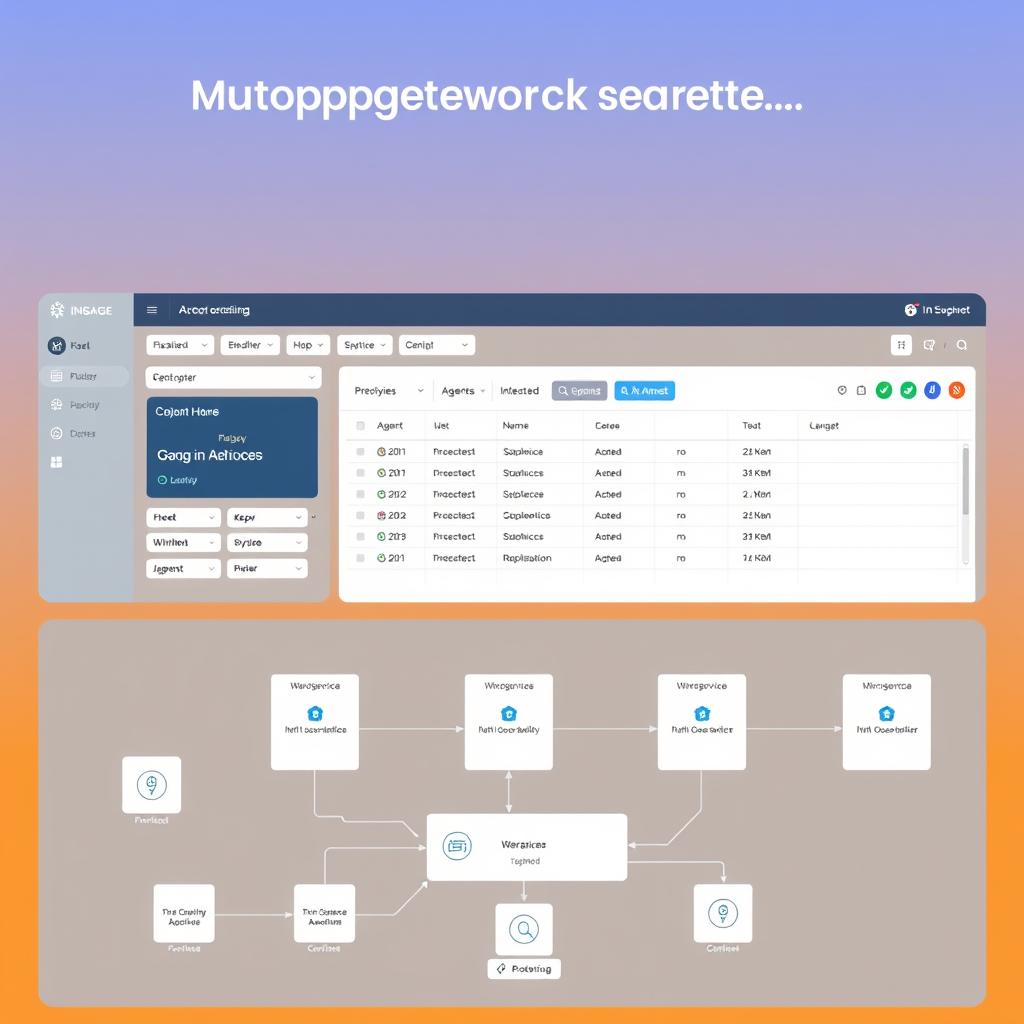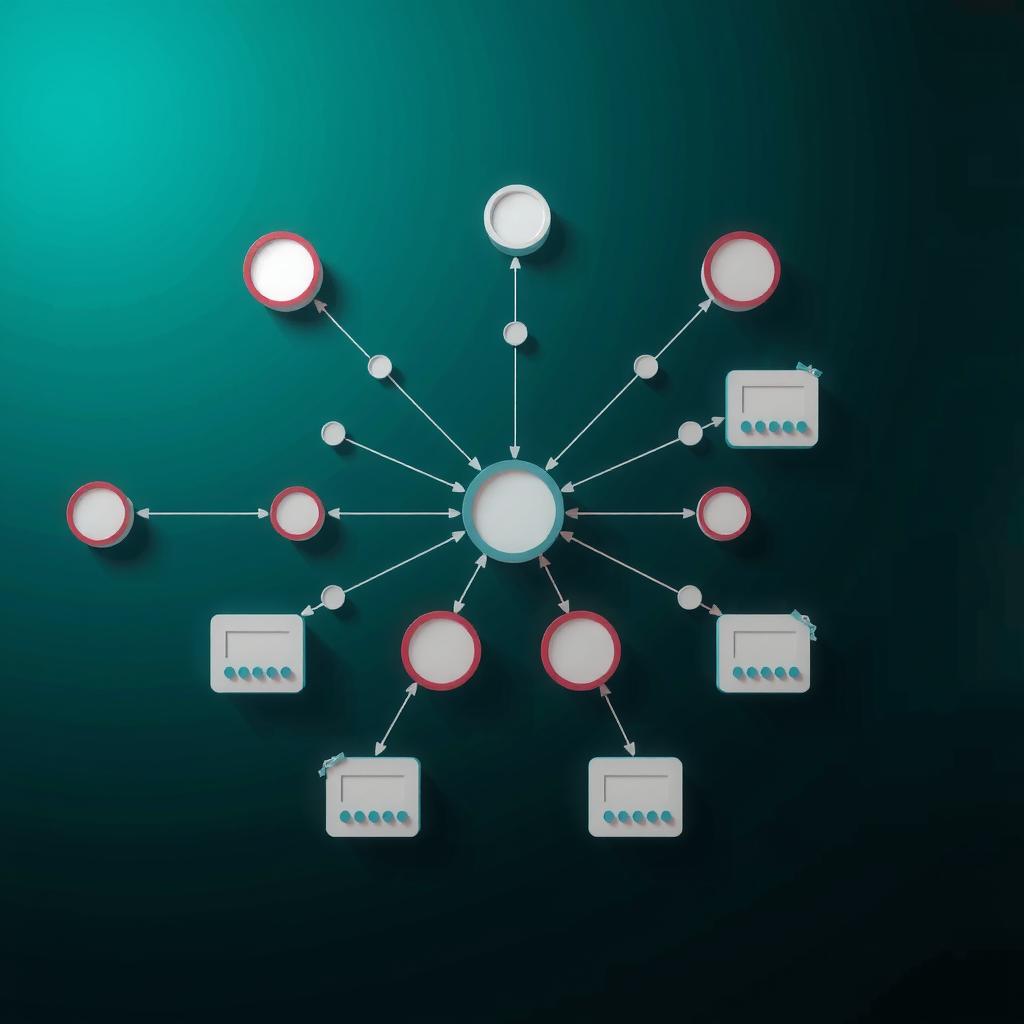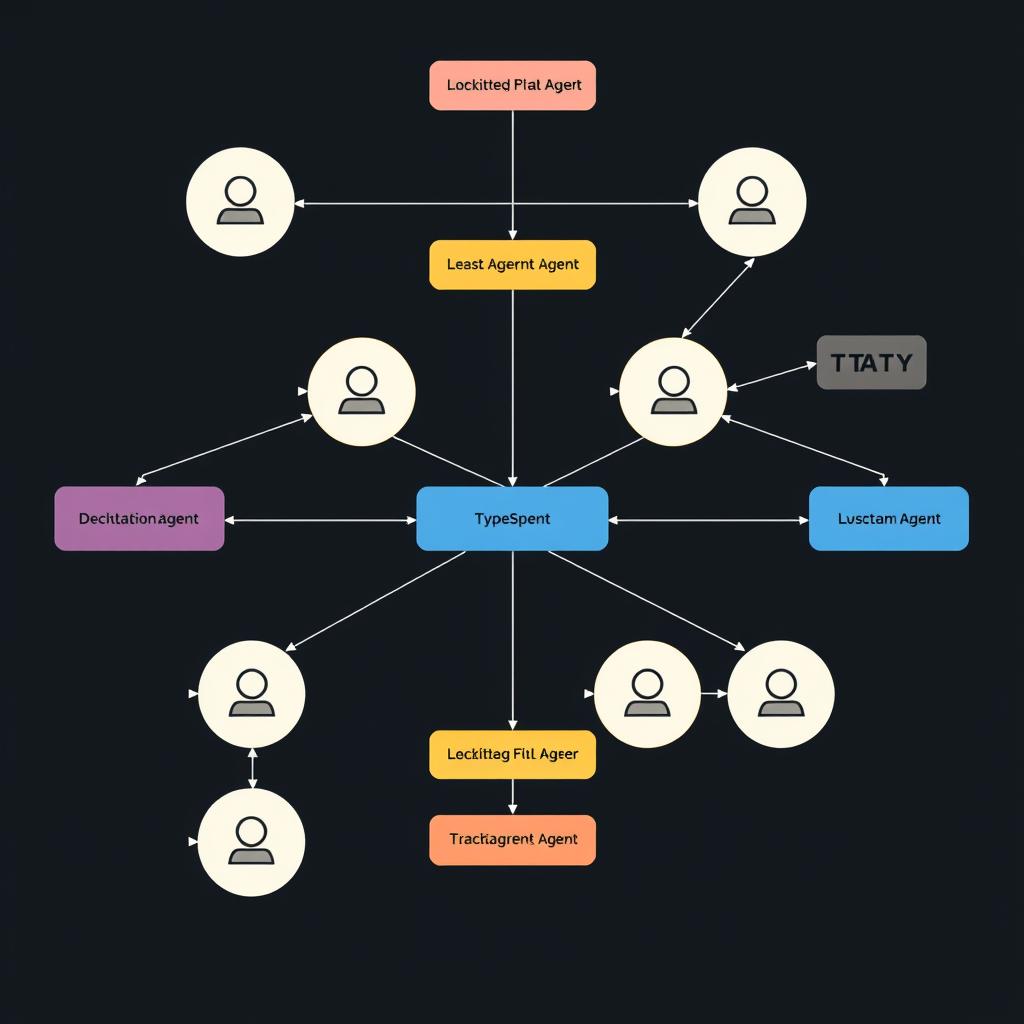
The bottom line: Swarms is an enterprise-grade, production-ready multi-agent orchestration framework with 6.8k GitHub stars, Apache 2.0 license, and 50+ contributors . It provides 10+ prebuilt multi-agent architectures — sequential, concurrent, hierarchical, graph-based, and swarm routing — with MCP protocol support and backwards compatibility with LangChain, AutoGen, and CrewAI. At v6.8.1 (December 2024) with 434 GitHub dependents , it’s one of the most comprehensive open-source multi-agent frameworks shipping today.
The Multi-Agent Framework Landscape
Multi-agent orchestration frameworks solve one core problem: coordination primitives. Agents need to discover each other, share state, handle failures, and decide who acts next. Frameworks let teams focus on domain logic instead of distributed systems plumbing (GuruSup, 2026) .
The 2026 landscape breaks into four categories:
| Category | Examples | Abstraction |
|---|---|---|
| Graph-based agents | LangGraph | Directed graphs with typed state |
| Role-based teams | CrewAI | Roles, goals, backstories |
| Handoff agents | OpenAI Agents SDK, Claude SDK | Agent-to-agent transfer |
| Swarm architectures | Swarms, open-multi-agent | Prebuilt collaboration patterns |
Swarms occupies a unique slot: it’s not just a framework but a framework of frameworks — each with different topology (sequential, parallel, hierarchical, DAG, mesh). Most other frameworks give you one paradigm. Swarms gives you a toolbox of 10+ paradigms .
Architecture: The 10+ Multi-Agent Patterns
Swarms ships with a comprehensive library of prebuilt multi-agent architectures. Each targets a different coordination shape:
SequentialWorkflow — Linear Chain
The simplest pattern: output of agent N feeds as input to agent N+1. Best for data pipelines, report generation, and content production chains.
from swarms import Agent, SequentialWorkflow

researcher = Agent(
 agent_name="Researcher",
 system_prompt="Research and provide a detailed technical summary.",
 model_name="gpt-5.4",
)

writer = Agent(
 agent_name="Writer",
 system_prompt="Write a polished article from research, include code examples.",
 model_name="gpt-5.4",
)

workflow = SequentialWorkflow(agents=[researcher, writer])
result = workflow.run("Compare Redis and DragonflyDB for agent state persistence")
ConcurrentWorkflow — Parallel Processing
All agents run simultaneously. Each receives the same task and produces independent outputs. Best for high-throughput batch processing like multi-perspective analysis.
from swarms import Agent, ConcurrentWorkflow

market_analyst = Agent(agent_name="Market-Analyst", system_prompt="...", model_name="gpt-5.4")
financial_analyst = Agent(agent_name="Financial-Analyst", system_prompt="...", model_name="gpt-5.4")
risk_analyst = Agent(agent_name="Risk-Analyst", system_prompt="...", model_name="gpt-5.4")

workflow = ConcurrentWorkflow(agents=[market_analyst, financial_analyst, risk_analyst])
results = workflow.run("Analyze AI impact on healthcare infrastructure")
Per the Redis blog on agent orchestration (Feb 2025), parallel execution is one of five core orchestration patterns — alongside sequential, group chat, handoff, and magentic — and each demands different tradeoffs in latency and state management .
HierarchicalSwarm — Director + Workers
A director agent decomposes tasks and assigns them to worker agents. Workers report back, and the director synthesizes results with optional feedback loops.
from swarms import HierarchicalSwarm

swarm = HierarchicalSwarm(
 director=Agent(agent_name="Director", model_name="gpt-5.4"),
 workers=[
 Agent(agent_name="Scraper", system_prompt="Extract raw data from sources"),
 Agent(agent_name="Analyst", system_prompt="Analyze data for patterns"),
 Agent(agent_name="Validator", system_prompt="Cross-reference findings for accuracy"),
 ],
 max_loops=2,
)

result = swarm.run("Produce a verified market analysis report on vector databases")
This maps directly to production patterns: most real-world systems use hybrid architectures where hierarchical teams use mesh coordination internally (GuruSup architecture patterns, 2026) .
AgentRearrange — Dynamic Relationships
Define agent flows using a string syntax: "researcher -> writer, editor". Agents pass output to downstream agents based on the relationship string. No graph construction needed.
from swarms import Agent, AgentRearrange

researcher = Agent(agent_name="researcher", model_name="gpt-5.4")
writer = Agent(agent_name="writer", model_name="gpt-5.4")
editor = Agent(agent_name="editor", model_name="gpt-5.4")

flow = "researcher -> writer, editor"
system = AgentRearrange(agents=[researcher, writer, editor], flow=flow)
outputs = system.run("Analyze AI impact on modern cinema production")
GraphWorkflow — Directed Acyclic Graph
For complex dependencies with fan-out and fan-in, GraphWorkflow builds a typed DAG where nodes are agents or functions and edges define data flow and conditional routing.
from swarms import Agent, GraphWorkflow, Node, Edge, NodeType

workflow = GraphWorkflow()
workflow.add_node(Node(id="researcher", type=NodeType.AGENT, agent=researcher))
workflow.add_node(Node(id="writer", type=NodeType.AGENT, agent=writer))
workflow.add_node(Node(id="reviewer", type=NodeType.AGENT, agent=reviewer))
workflow.add_node(Node(id="publisher", type=NodeType.AGENT, agent=publisher))
workflow.add_edge(Edge(source="researcher", target="writer"))
workflow.add_edge(Edge(source="writer", target="reviewer"))
workflow.add_edge(Edge(source="reviewer", target="publisher"))
workflow.set_entry_points(["researcher"])
workflow.set_end_points(["publisher"])
result = workflow.run("Produce a technical document on small language models")
This is functionally equivalent to LangGraph’s node/edge model but with less boilerplate — no separate state schema definition, no compilation step .
MixtureOfAgents (MoA) — Parallel Experts + Aggregator
Multiple specialist agents run in parallel on the same task, and an aggregator agent synthesizes their outputs into a final answer. Inspired by the Mixture of Agents research paper.
SwarmRouter — Universal Orchestrator
A single interface that dispatches to any swarm type based on the task. Lets you swap orchestration strategies at runtime without changing caller code.
from swarms import SwarmRouter

router = SwarmRouter()
result = router.run(
 task="Analyze quarterly financial filings",
 preferred_architecture="hierarchical",
)
Enterprise Features
MCP Protocol Support
Swarms implements the Model Context Protocol (MCP) as a first-class tool integration layer. MCP is a standardized protocol for tool discovery — agents use it to announce capabilities and discover tools from other agents at runtime (Claude SDK docs, 2026) . This means Swarms agents can interact with any MCP-compatible tool server, including VS Code, JetBrains IDE tools, and third-party integrations.
Multi-Provider Support
The framework is model-agnostic. Configure providers via environment variables:
OPENAI_API_KEY="sk-..."
ANTHROPIC_API_KEY="sk-ant-..."
GROQ_API_KEY="gsk_..."
WORKSPACE_DIR="agent_workspace"
Backwards Compatibility
Swarms explicitly supports compatibility with LangChain, AutoGen, and CrewAI tool abstractions — meaning teams migrating from those frameworks can reuse existing tool definitions without rewriting. Enterprise integration features include multi-model provider support, custom agent dev framework, and extensive tool library .
Production Scalability
- Concurrent multi-agent processing with intelligent resource management
- Load balancing and auto-scaling for horizontal deployment
- Comprehensive observability with full monitoring and logging
- Agent registry for discovery at scale
- Docker-based deployment patterns
Comparison: Swarms vs. LangGraph vs. CrewAI
| Dimension | Swarms | LangGraph | CrewAI |
|---|---|---|---|
| Architecture patterns | 10+ (sequential, concurrent, hierarchical, DAG, MoA, etc.) | Graph (DAG + cycles) | Sequential, hierarchical, consensual |
| State management | Per-agent memory + shared context | Built-in checkpointing per node | Task output based (no direct messaging) |
| Tool integration | MCP, LangChain compat, built-in tools | LangChain tool ecosystem | Custom tools, LangChain compatible |
| Orchestration syntax | Prebuilt classes + string syntax | Python graph construction | Role/goal/backstory YAML-like |
| Learning curve | Medium — pick a pattern | Steep — define schema, graph, edges | Low — 20-line working system |
| Production readiness | High (Docker, scaling, monitoring) | High (checkpointing, LangSmith) | Medium (limited error handling, no checkpointing) |
The key insight from the Redis orchestration guide is that the pattern you choose shapes your infrastructure requirements — each demands different tradeoffs in latency, state management, and coordination complexity . Swarms’ value is that it doesn’t lock you into one pattern: you start with SequentialWorkflow, graduate to HierarchicalSwarm, and eventually compose patterns via SwarmRouter.
Installation and Quick Start
# pip
pip3 install -U swarms

# uv (recommended — faster installs)
uv pip install swarms

# poetry
poetry add swarms

# from source
git clone https://github.com/kyegomez/swarms.git
cd swarms
pip install -r requirements.txt
Create your first agent:
from swarms import Agent

agent = Agent(
 model_name="gpt-5.4",
 max_loops="auto", # Agent decides when done
 interactive=True, # Real-time feedback
)
agent.run("Explain the key benefits of multi-agent systems vs. single-agent architectures")
The max_loops="auto" setting is particularly useful: the agent keeps reasoning and acting until it reaches a stopping condition. For bounded, latency-sensitive tasks use a fixed integer value.
Production Deployment Patterns
For real-world deployments, follow these patterns:
1. Stateless agents with external state. Use Redis or PostgreSQL for session persistence. Swarms agents are memory-managed but stateless by design — checkpoint to external stores for fault tolerance.
2. Hierarchical for complex workflows. Director agents decompose tasks; worker agents execute. This mirrors the production pattern documented by GuruSup where most enterprise systems use hybrid architectures .
3. Sequential for predictable pipelines. Content generation, report assembly, and data transformation chains where each step depends on the previous.
4. Concurrent for parallelism. Batch analysis, multi-perspective evaluation, and any workload that benefits from running N agents simultaneously.
Related Reads
- Multi-Agent Production in 2026: Patterns, Pitfalls, and Infrastructure — Production patterns for multi-agent systems including supervisor, routing, and subscription architectures
- Astron Agent: iFlyTek’s Open-Source Enterprise Multi-Agent Orchestration Platform — Microservices-based multi-agent orchestration with Kafka, MCP, and RPA
- Claude Agent SDK Tutorial: Building Production Agents with Anthropic — Tool-use-first agent patterns with extended thinking and MCP
- Agent Orchestration Patterns: Swarm vs Mesh vs Hierarchical — The architectural tradeoffs between different coordination topologies
- TauricResearch/TradingAgents Review — Multi-Agent LLM Trading Framework — Production multi-agent system for quantitative finance
- Hermes Agent Multi-Agent Setup Guide — Running specialized AI agent teams with MCP support
Sources: GitHub — kyegomez/swarms README, GuruSup — Best Multi-Agent Frameworks 2026, Redis Blog — AI Agent Orchestration Platforms (Feb 2025), GuruSup — Agent Orchestration Patterns (2026), Anthropic — Claude Agent SDK / MCP Protocol Docs, Swarms Documentation — docs.swarms.world/introduction
📖 Related Reads
- ToolBrain — tool reviews, LLM comparisons, and AI workflow guides
- CodeIntel Log — code quality, debugging, and software engineering benchmarks
- Hermes Tutorials — Hermes Agent setup, configuration, and advanced workflows
Cross-links automatically generated from NiteAgent.
← Back to all posts